Your notes already write themselves. Now the follow-ups do too.
Gemini takes the notes. Michael files them into your company brain, then works every follow-up in the channel where the meeting happened. Tickets, ticket updates, and customer emails, drafted for your team to approve.
Everyone was in the meeting. Nobody does the follow-ups.
The notes are good now. Gemini catches every decision, every owner, every date, and drops a tidy doc into Drive.
Then the doc sits there.
Because a note that reads “Sam to open a ticket for SAML” is not a ticket. Someone still has to open Jira, find the epic, write the description, and remember which customer asked for it. By Thursday the doc is three meetings back, and the only person who remembers the BAA deadline is the one who typed it.
Better notes didn't give you follow-through. They gave you a better record of what you didn't do.
Michael reads the notes, files what matters, and does the follow-ups in the open.
The notes land in Drive. Michael files them in the brain.
Gemini writes the notes and Drive stores them. Michael reads them the moment they land, pulls out the decisions, the owners, and the dates, and files them against the account they belong to. Not a summary pasted into a thread. A place in your company's memory that every other channel can read.
Six weeks later, when support asks why Meridian is on a custom SSO, the answer is already there.

 MichaelAPP
Meridian Health — onboarding kickoff, Sep 8
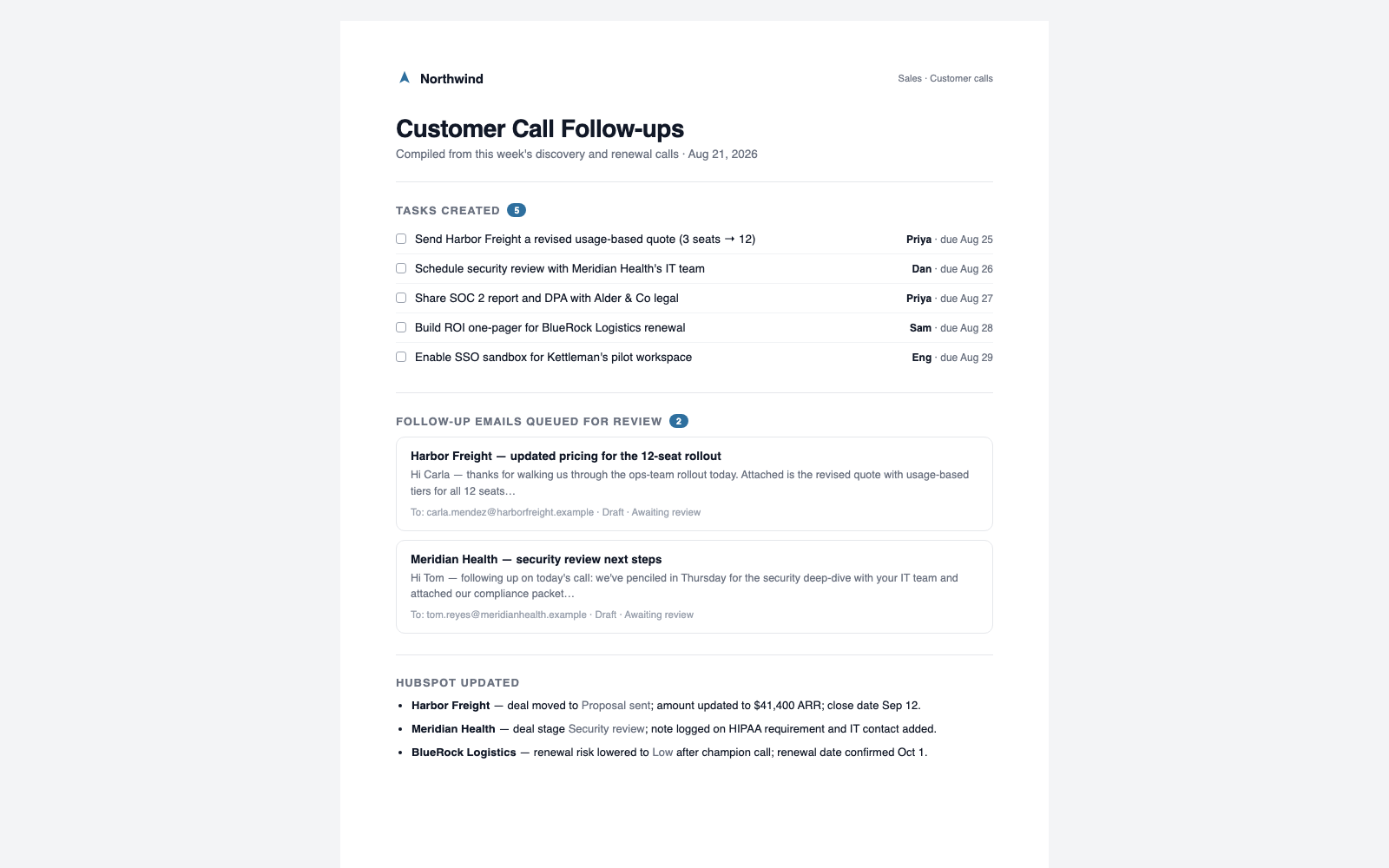
Filed against the Meridian Health account. Two of the five follow-ups came out of the call without an owner.
SourceGemini notes
AccountMeridian Health
Follow-ups5
Drafts2
Open in Michael's brain

Not a folder. A brain.
Every meeting, doc, and thread Michael reads wires new facts into the same graph your whole company queries. This is the Mind view from the product. Drag it, zoom it, open a node.
Sample workspace. Yours fills in as Michael reads your meetings, docs, and channels.
Action items become tickets, with the ask attached.
Where a follow-up needs new development, Michael drafts the Jira issue in your engineering channel: what the customer asked for, which meeting it came from, which date it blocks, and a first pass at scope. The epic and the account are already linked.
Your lead edits a ticket instead of reconstructing a conversation they weren't in.
 JiraAPP
ONB-214: SAML SSO against Meridian's Okta tenant
Meridian will not open the pilot workspace without SSO. Raised in the Sep 8 kickoff.
StatusDraft
EpicMeridian onboarding
Estimate5 days
BlocksOct 1 go-live
View in Jira
 JiraAPP
ONB-215: Bulk import for 40k patient records at cutover
Meridian's migration runs the weekend before go-live. Export format is unconfirmed, which is the open question on scope.
StatusDraft
EpicMeridian onboarding
EstimateNeeds format
OwnerUnassigned
View in Jira
Create both issues in the Meridian onboarding epic?
Create them
The open ticket updates itself, in front of the team.
Michael takes what the meeting settled and writes it into the Zendesk ticket that was waiting on it. Then he posts the update in the channel, so the clarifications happen where people can see them and correct him before the customer does.
The ticket stops being the place where questions go to wait.
 ZendeskAPP
ZD-5120: When will SSO be available for our workspace?
Answered from the Sep 8 kickoff: SAML lands with the Oct 1 go-live, SCIM is not scoped.
StatusOpen
RequesterMeridian Health
Waiting18 days
LinkedONB-214
View in Zendesk

The customer email is written before anyone opens Gmail.
Michael drafts the recap in your voice, with the dates the meeting actually agreed to and nothing it didn't. He posts it in the channel, takes edits inline, and sends when someone says send.
Nothing reaches a customer that a person on your team hasn't read.
 GmailAPP
Meridian Health — kickoff recap and next steps
To: t.reyes@meridianhealth.example · Draft · awaiting review
ConfirmsOct 1 go-live
ScopeSAML, not SCIM
Asks forSigned BAA
StatusDraft
Open draft in Gmail

Send the recap to Meridian Health?
Send it
Michael works with your team, in the open.
In the room where it happened
Follow-ups land in the channel for the team that was in the meeting, not in a queue somebody checks on Fridays. The people who can correct them are already there.
A human sends
Michael drafts the ticket, the update, and the email, then waits. Nothing reaches a customer or a backlog until someone on your team approves it.
One memory, shared
What your team decided on Tuesday is available to support on Friday and sits in the ticket description in between. The brain is the same brain in every room.
Every follow-up has a line
Michael links the sentence in the notes behind each ticket and each draft, so you can check the follow-up against what was actually said.
"We already had perfect notes and terrible follow-through. Michael closed that gap in a week. The tickets are open before standup, the customer email is waiting for me to read instead of waiting for me to write, and I stopped being the person who remembers what we promised."

Michael learns the room
Add Michael bots to existing conversation channels and they will learn how to help out as your team interacts with them.
Hire Michael+ your docs